
Owner-operated in Bethlehem. Open Mon–Sat, 7 to 7.
OSHA Porta Potty Requirements for Construction Sites in Pennsylvania
29 CFR 1926.51 in plain English for Lehigh Valley superintendents: how many toilets, what counts as a urinal, when a crew is exempt, hand-washing rules, and the Pennsylvania and Bethlehem rules that sit on top.
Calls answered live during business hours. Quote requests get a callback within 30 minutes, Mon–Sat 7 AM–7 PM.
- Toilets1 toilet to 20 workers; 1 seat + 1 urinal per 40 from 21–199; per 50 at 200+ (Table D-1).
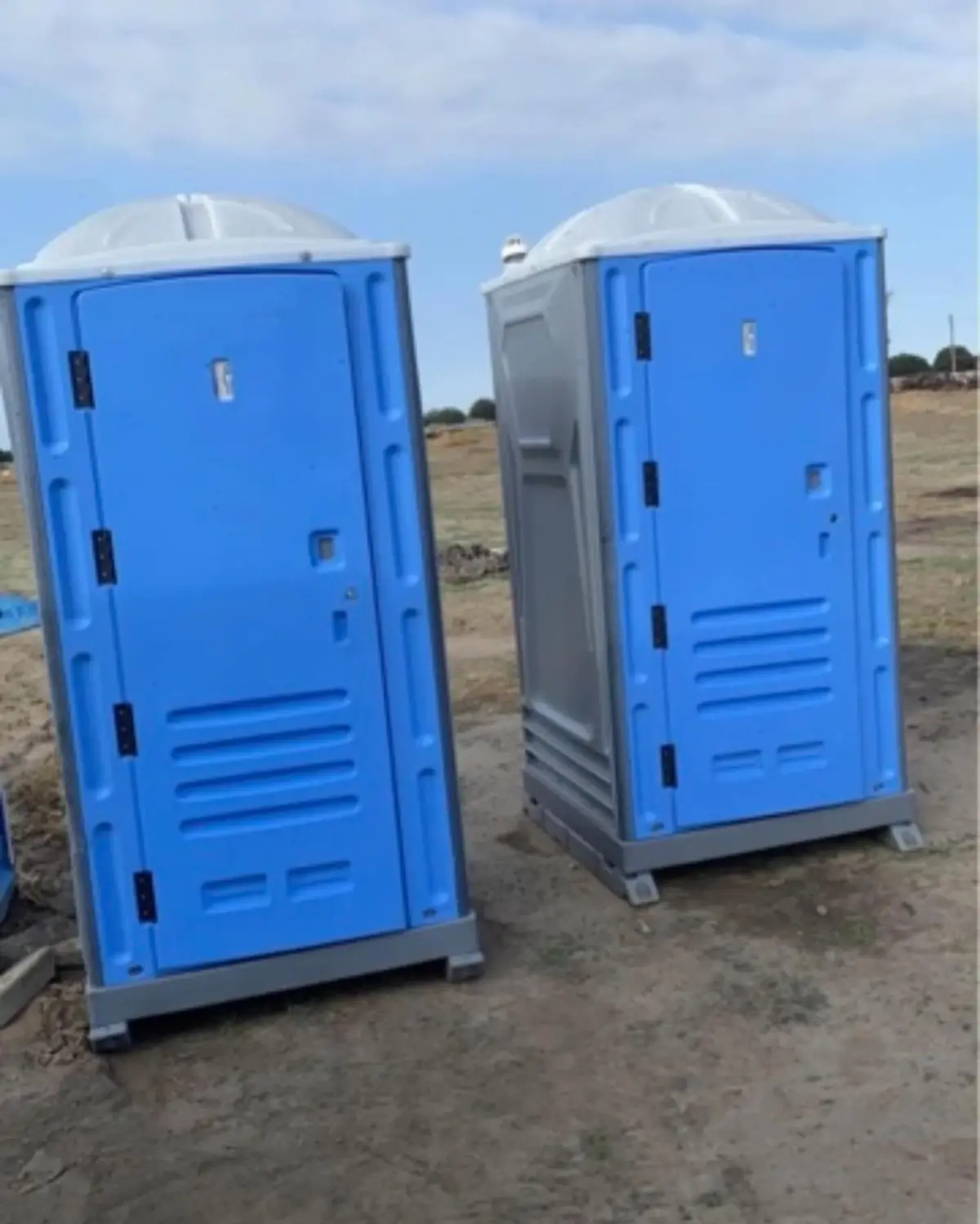
- UrinalsA PJN3 counts as one seat plus one urinal.
- Washing1926.51(f) requires washing facilities in sanitary condition.
- ExemptionMobile crews with transportation readily available to nearby toilets.
- Pennsylvania25 Pa. Code §73.64 and §71.63; Bethlehem right-of-way permit for street placement.
What does OSHA 1926.51(c) require for jobsite toilets?
OSHA 29 CFR 1926.51(c) requires construction employers to provide toilets by Table D-1: one toilet for 20 or fewer employees, one toilet seat and one urinal per 40 employees from 21 to 199, and one seat and one urinal per 50 employees at 200 or more. Under temporary field conditions at least one toilet is required. The rule does not apply to mobile crews with transportation readily available to nearby toilets.
| Number of employees | Minimum facilities (Table D-1) | Equivalent in PolyJohn PJN3 units |
|---|---|---|
| 20 or fewer | 1 toilet | 1 |
| 21–40 | 1 seat + 1 urinal | 1 |
| 41–80 | 2 seats + 2 urinals | 2 |
| 81–120 | 3 seats + 3 urinals | 3 |
| 121–160 | 4 seats + 4 urinals | 4 |
| 161–199 | 5 seats + 5 urinals | 5 |
| 200–250 | 1 seat + 1 urinal per 50 → 5 | 5 |
| 251–300 | 6 | 6 |
Source text: eCFR, 29 CFR 1926.51 Sanitation. Paragraph (c)(3) allows privies, chemical toilets, recirculating toilets or combustion toilets where a sanitary sewer is not available, unless prohibited by local codes. The legal minimum is in the table; our recommendation for crews on 10-hour days is one unit per 20 workers so weekly service is enough.
What do the other parts of 1926.51 require?
Beyond toilets, 1926.51 requires potable drinking water with single-use cups or fountains (a), no common drinking cups (a)(4), outlets for non-potable water clearly marked (b), washing facilities maintained in sanitary condition (f), and sanitary disposal of waste (d). On a Lehigh Valley jobsite that means a water cooler, a hand wash station or sanitizer at every unit cluster, and a hauler who takes the waste to a permitted plant.
| Paragraph | Requirement | How a Bethlehem site meets it |
|---|---|---|
| 1926.51(a) Potable water | Adequate supply, single-service cups or fountain, containers labeled | Jobsite water cooler; not our scope but we flag missing coolers |
| 1926.51(c) Toilets | Table D-1 counts; single lockable unit may serve both sexes | PJN3 units sized per the table above |
| 1926.51(d) Food handling | Sanitary food service where provided | Hand wash station near the lunch area |
| 1926.51(f) Washing facilities | Adequate facilities, sanitary condition | Bravo station with water, soap, towels; sanitizer in every unit |
| 1926.51(c)(3) Sewer not available | Chemical toilets permitted unless local code prohibits | Bethlehem Health Bureau exempts temporary units under 25 Pa. Code §73.64 |
What are the Pennsylvania rules on top of OSHA?
Pennsylvania adds three things: 25 Pa. Code §73.64 lets the local sewage agency exempt temporary construction toilets from on-lot permits but treats improper maintenance as a nuisance; §71.63 requires chemical-toilet waste to go to a DEP-approved disposal site; and haulers carry a DEP transporter registration. In Bethlehem, placing a unit on a street or sidewalk needs an Engineering Bureau right-of-way permit, and openings are barred December 1 to March 1.
- 25 Pa. Code §73.64 — chemical or portable toilets at temporary construction sites.
- 25 Pa. Code §71.63 — retaining tanks, disposal at DEP-approved sites.
- City of Bethlehem Engineering Permit Application — containers in the right-of-way, $50, $1M liability, Engineering Bureau 610-865-7063.
This page explains the published rules; it is not legal advice. Site-specific requirements come from your safety plan, your general contractor and the Bethlehem Bureau of Code Enforcement (610-865-7091). Confirm before you rely on a count.
What should a superintendent check each week?
Walk the units once a week: tank below two-thirds, tissue stocked, sanitizer full, door latch and vent working, unit level and staked, path clear for the service truck, log card signed. If workers per unit has crept above 20 because the crew grew, add a unit the same day; an inspector counts heads, not the original order.
- Count the crew. Include subcontractors on site that day.
- Check the table. Divide by 40 (or 50 above 200), round up. Compare with units on site.
- Check the log card. Service date inside each unit's door; call if a visit was missed.
- Check washing. Sanitizer full or hand wash station stocked.
- Check placement. Level, staked, 10 ft from hydrants, not on the sidewalk without the permit.
OSHA jobsite toilet rules: questions people ask
Does OSHA require a porta potty on every construction site?
OSHA requires toilets on construction jobsites under 1926.51(c), with one exception: mobile crews that have transportation readily available to nearby toilet facilities. A roofing crew with a truck and a gas station two minutes away can rely on that; a crew framing a house in a new Bethlehem Township subdivision with no open businesses nearby cannot.
Does a porta potty count as a toilet and a urinal under OSHA?
A PolyJohn PJN3 has a toilet seat and a separate non-splash urinal, so one unit counts as one seat plus one urinal for Table D-1. Units without a urinal count as a seat only, which matters once a crew passes 20 workers.
Does OSHA say how often a jobsite toilet must be cleaned?
No fixed frequency. 1926.51(c) requires toilets to be provided and 1926.51(a) and (d) require sanitary conditions and waste disposal in a way that does not create a health hazard. Weekly service is the industry baseline; OSHA inspectors cite overflowing or unsanitary units under the general sanitation language, so more frequent service on busy sites is the safe reading.
Does OSHA require hand washing on a construction site?
1926.51(f) requires adequate washing facilities for employees engaged in operations where contaminants may be harmful, and it requires that washing facilities be maintained in a sanitary condition. Hand sanitizer in the unit is common practice; a Bravo hand wash station with water, soap and towels is the clear way to meet the rule.
Do separate toilets for men and women apply on a jobsite?
1926.51(c)(4) allows a single-occupancy toilet with a lockable door to serve both sexes. Portable units with an occupancy latch meet that. Larger sites with 100+ workers often add separate designated units anyway.
What about accessible units on a construction site?
The 2010 ADA Standards exempt single-user portable toilets on construction sites used only by construction personnel. If the public, inspectors or office staff use them, or your contract requires it, add a We'll Care III. See the Access Board guide to §213.
Can the Pennsylvania DEP cite a jobsite for portable toilets?
Pennsylvania's sewage rules let the local agency (in Bethlehem, the City Health Bureau) exempt temporary construction toilets from on-lot permits under 25 Pa. Code §73.64, but improper installation or maintenance is a nuisance under the Sewage Facilities Act. Waste must go to a DEP-approved site under §71.63, which is what our registered hauler does.
Official sources cited on this page
Quote request
Get an itemized quote
ZIP, dates, unit type, quantity, headcount, phone. That is all we need.